HeatLoop puts a liquid-cooled compute rack in your plant room at our own cost. It runs on our electricity, and the heat it produces goes into your circuit at 10–20% below what you pay for heat today. You buy heat. We handle everything that makes it.
A discount only exists where the heat you buy today is expensive enough to leave room in it. For some buildings there is no room, and we would rather establish that in the first email than the third meeting. Buildings already on a well-performing heat pump or geothermal are usually among them — we do not beat them on price.
Estonia's 172 regulated networks run from €54.43 to €137.69/MWh ex-VAT — Tallinn sits at €77.82. We price below whichever one you are on, so every megawatt-hour we can cover comes off the bill at a discount.
Fuel plus carbon cost plus boiler maintenance. We displace the fuel and take the maintenance off your plate for the share of load we serve.
Resistive heating costs you roughly the delivered price of electricity. That is the most expensive heat there is, and the clearest saving we can offer.
Pools, spas, hotels, laundries, food processing and greenhouses. Summer demand is what makes a heat node earn all twelve months.
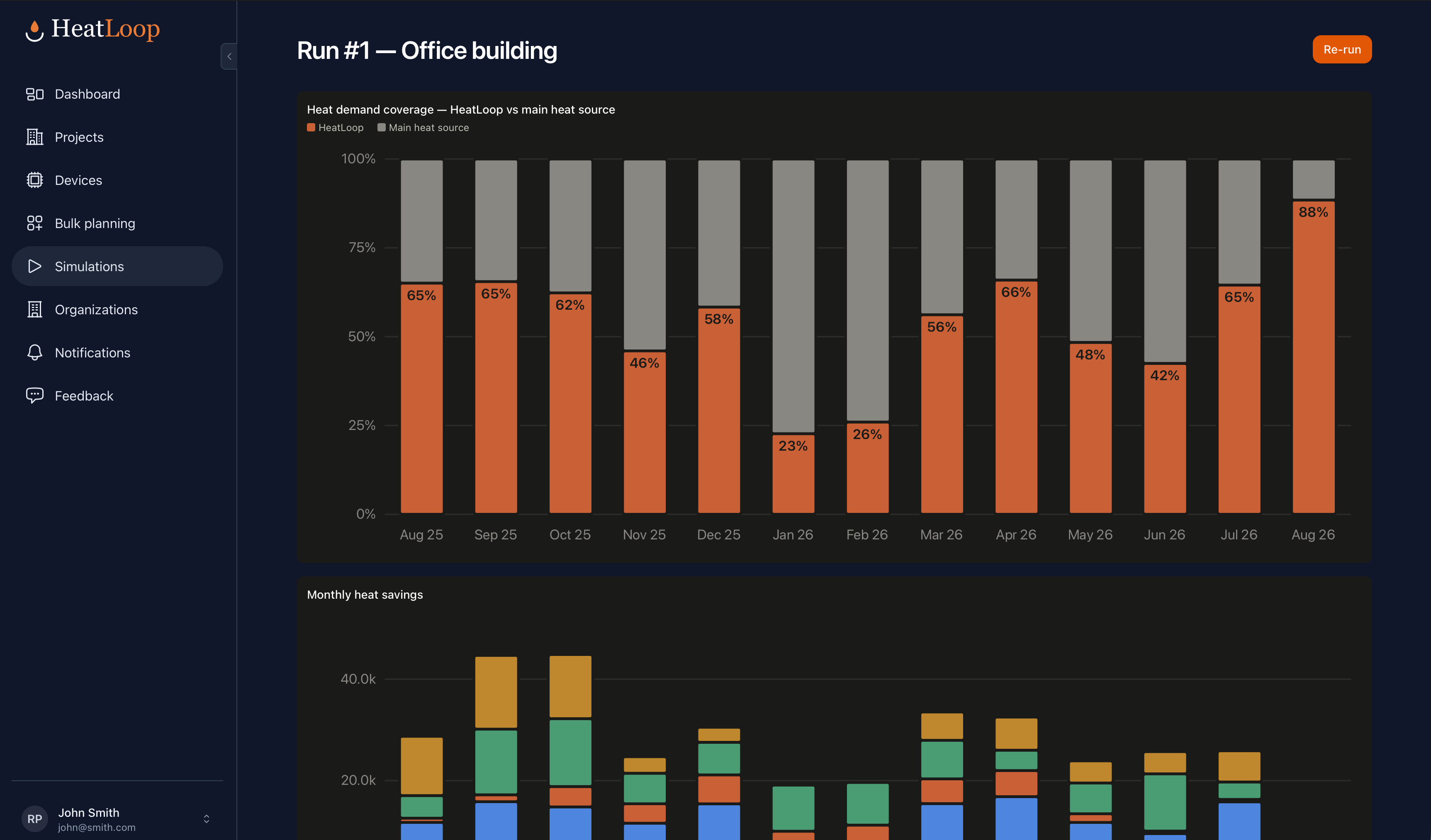
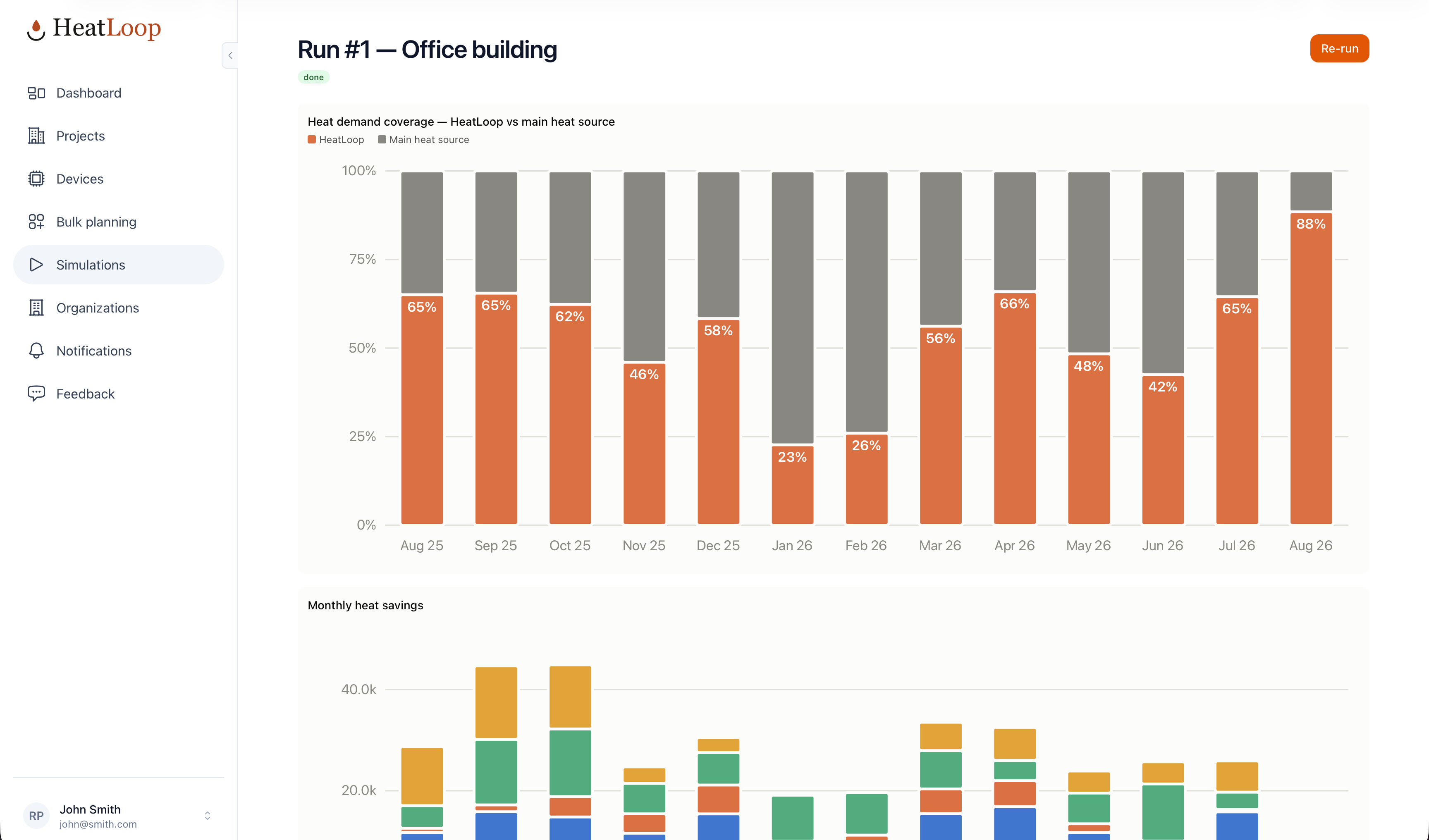
A 2,049 m² Tallinn office building on district heating, from metered consumption over a full year. Tallinn is on the cheaper side — 67% of Estonian networks pay more, so on most of them the same building saves more. Find your own network.
That figure assumes we cover the building's full annual heat demand. In practice a node covers part of it, and the saving scales with the share we actually deliver.
Heat output tracks compute load, so a realistic contract is written around a base-load share with your existing system carrying peak and backup. We will model your building specifically rather than apply this example to it.
Five things. If you can answer yes to the first three, the rest is straightforward.
Nothing. HeatLoop owns the rack, the cooling loop, the heat exchanger and the networking, and pays for the installation. You provide space and a connection.
Heat, metered in megawatt-hours, at 10–20% below what the same heat costs you today, fixed for the term of a long-term offtake agreement. There is no minimum-purchase obligation for heat we fail to deliver.
We do. The rack runs on a metered supply that is our cost, not yours. Your electricity bill is unaffected by our consumption.
Heat output follows compute load, so it is not a guaranteed year-round source on its own. Your existing heating stays in place as the primary system and we sit alongside it. In practice we size the node so it covers base load rather than peak.
Liquid cooling moves the heat out in water rather than air, so a rack is far quieter than an air-cooled equivalent. We assess noise at survey and specify the installation around the space.
Long-term by design, since we are financing the hardware. Exact term and exit conditions are set per site — talk to us and we will put a draft in front of you.
Two exports answer most of our questions at once: what the building draws from the grid, and what it buys as heat. You can pull both yourself in under ten minutes.
A first assessment needs very little. Answer what you can — we can work out the rest from your metering data, and we will tell you honestly if the numbers do not work.
info@heatloop.com

A decentralised data centre — heat-recovery compute racks installed inside the buildings that need the heat.