HeatLoop installs liquid-cooled GPU racks inside businesses that need heat. Up to 95% of the electricity a rack consumes comes back out as hot water for the host, and the compute is offered to AI and rendering workloads. One machine, two products — and no heat left to throw away.
A conventional data centre spends money getting rid of its heat. We put the machine where the heat is already wanted, and turn it into value.
A liquid-cooled compute rack goes into the host building's plant room or a suitable service space. HeatLoop pays for the hardware, the installation, the heat node and the electricity the rack draws. The host provides floor space and a grid connection.
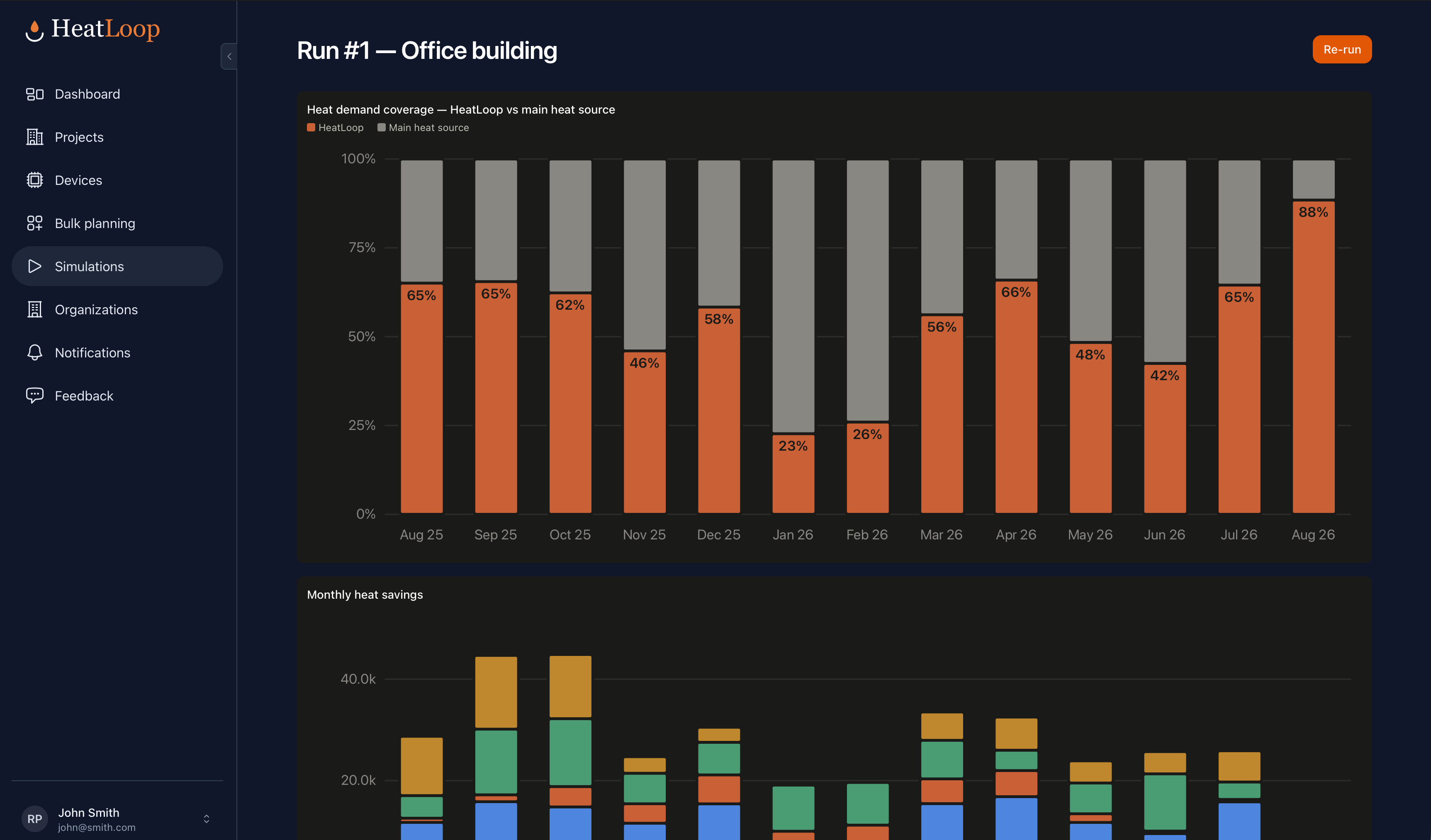
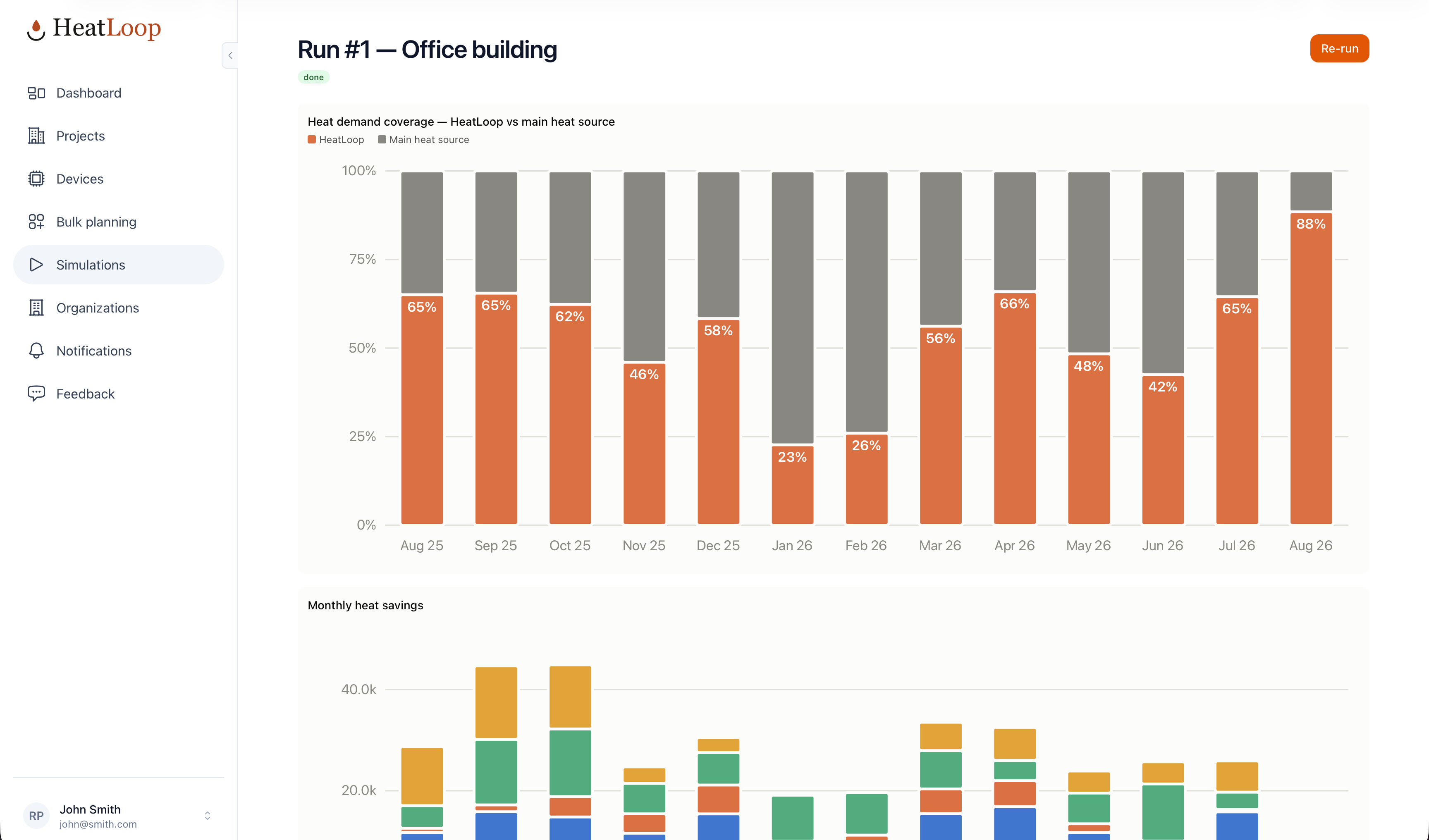
Coolant leaves the rack hot and passes through a heat exchanger into the building's existing water circuit. Up to 95% of the electricity the rack draws is recovered as usable heat, metered and billed below what the building pays for heat today.
GPU capacity is offered for AI training, inference and rendering through compute marketplaces and direct contracts, and is allocated as sites are commissioned. A share of capacity runs interruptible batch work, which we schedule into the cheapest hours of the day.
For GPU workloads, electricity is roughly a tenth of gross revenue. That leaves the model resilient to power-price swings — and structurally ahead of a conventional facility, which pays twice: once for the power, again for the cooling that dumps the resulting heat into the air.
Interruptible jobs are scheduled into the cheapest hours — our system simply cuts the expensive ones out. That keeps the cost of the heat we produce competitive even when the power market swings.
The electricity the rack draws is our cost, not the host's. The building buys heat by the megawatt-hour and nothing else — its own electricity bill is untouched by what we consume.
Nord Pool day-ahead results, twelve months to June 2026. Heat prices are the Competition Authority's approved ceilings — every Estonian network is listed here . Prices ex-VAT.
If your building runs on district heating or gas, we install a heat source at our own cost and sell you the output below what you pay today.
See if your building fits →Workstation- and data-centre-class NVIDIA accelerators for training, inference and rendering — inside the EU, on infrastructure that does not burn power on chillers.
Talk to us about capacity →Two revenue lines per rack, built on twelve months of Estonian electricity and heat-price data. Company details, the capital model and the sources behind the figures.
Read the company page →The same four steps for every building. A site is assessed against its own metering before we make an offer, which is also why we can say early when the numbers do not work.
We assess the building against its own metering — heat demand, electrical headroom, plant-room space and the circuit we would connect to.
The node is sized to the load we can reliably cover. Price, term and metering are fixed in writing before any hardware is ordered.
HeatLoop funds and installs the rack, cooling loop, heat exchanger and networking, then commissions the loop into the live building circuit.
Racks are run remotely as one fleet. Delivered heat is metered and billed; compute is scheduled around electricity prices and grid signals.
Whether you have a building, a workload, or a question about the model — a direct email is the fastest route to an answer.
info@heatloop.com

A decentralised data centre — heat-recovery compute racks installed inside the buildings that need the heat.